
Journal — The Blog
What AI changes for an independent manufacture
B.R.M has opened its configurator to every AI assistant, without favouring any one of them. What this changes for an independent French manufacture — and what, in Magny-en-Vexin, remains in the hands of the watchmakers.
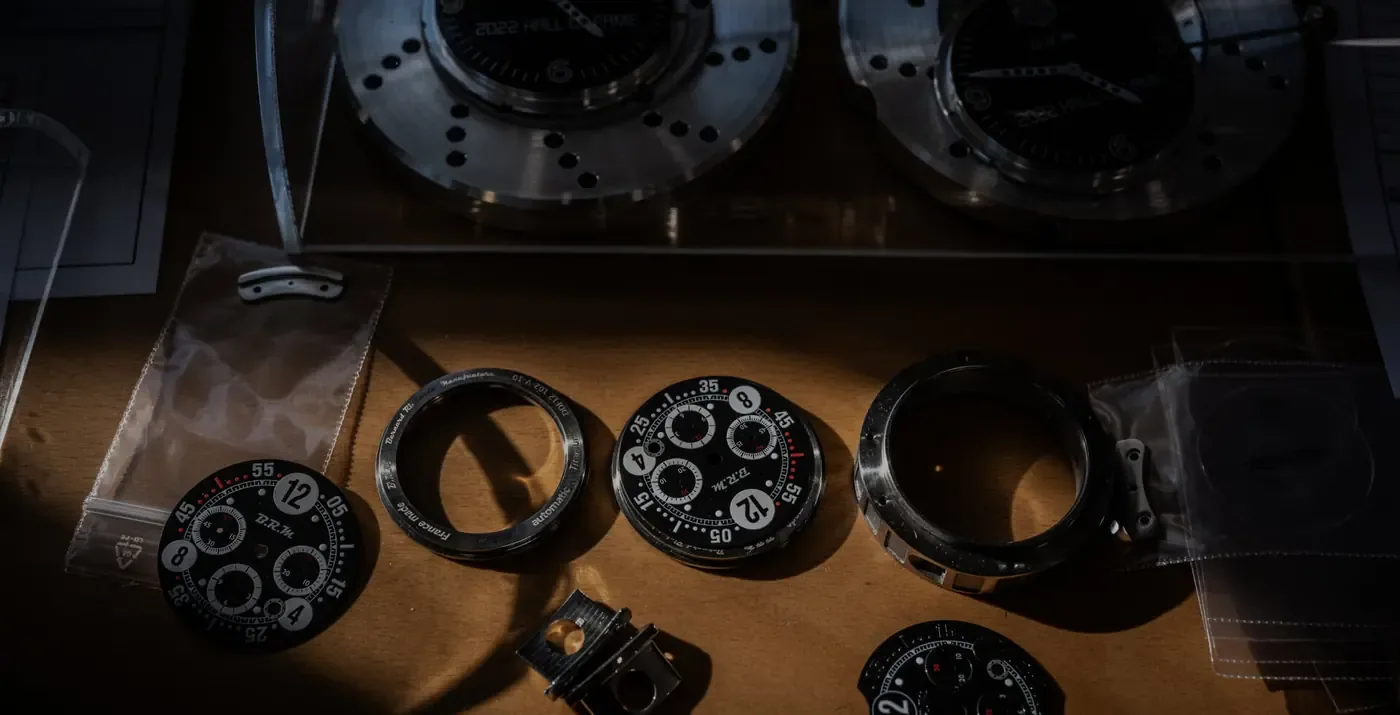
The B.R.M manufacture was founded in 1986 in Magny-en-Vexin, by the hands of Bernard Richards; the first B.R.M Chronographes watch dates from 2003. The house holds the Entreprise du Patrimoine Vivant label and makes each of its watches to order. For a long time, people discovered a B.R.M at a retailer, at a trade fair or on our website. Today, many first put their question to an AI assistant. We have chosen to answer it.
A question put to an AI deserves an accurate answer
An assistant that speaks about a brand without a reliable source guesses: a price read somewhere, an option that no longer exists, an approximate lead time. Rather than letting it guess, we give it access to the source: the B.R.M configurator and its rules. The options, the incompatibilities, the price for each country of delivery and the production lead time come from the manufacture, at the moment the question is asked.
Neutral between assistants
We have signed no exclusivity agreement with any provider. The connector follows an open standard, the Model Context Protocol (MCP), complemented by a REST API described in OpenAPI. ChatGPT, Claude, Gemini, Mistral's Le Chat, Microsoft Copilot, Perplexity or any other compatible client receive the same tools, the same prices and the same rules.
An independent manufacture has no business choosing its clients' assistant, any more than it chooses their browser. Everyone keeps their own; the watch remains the same. The instructions are on our page dedicated to AI assistants.
What we do not entrust to AI
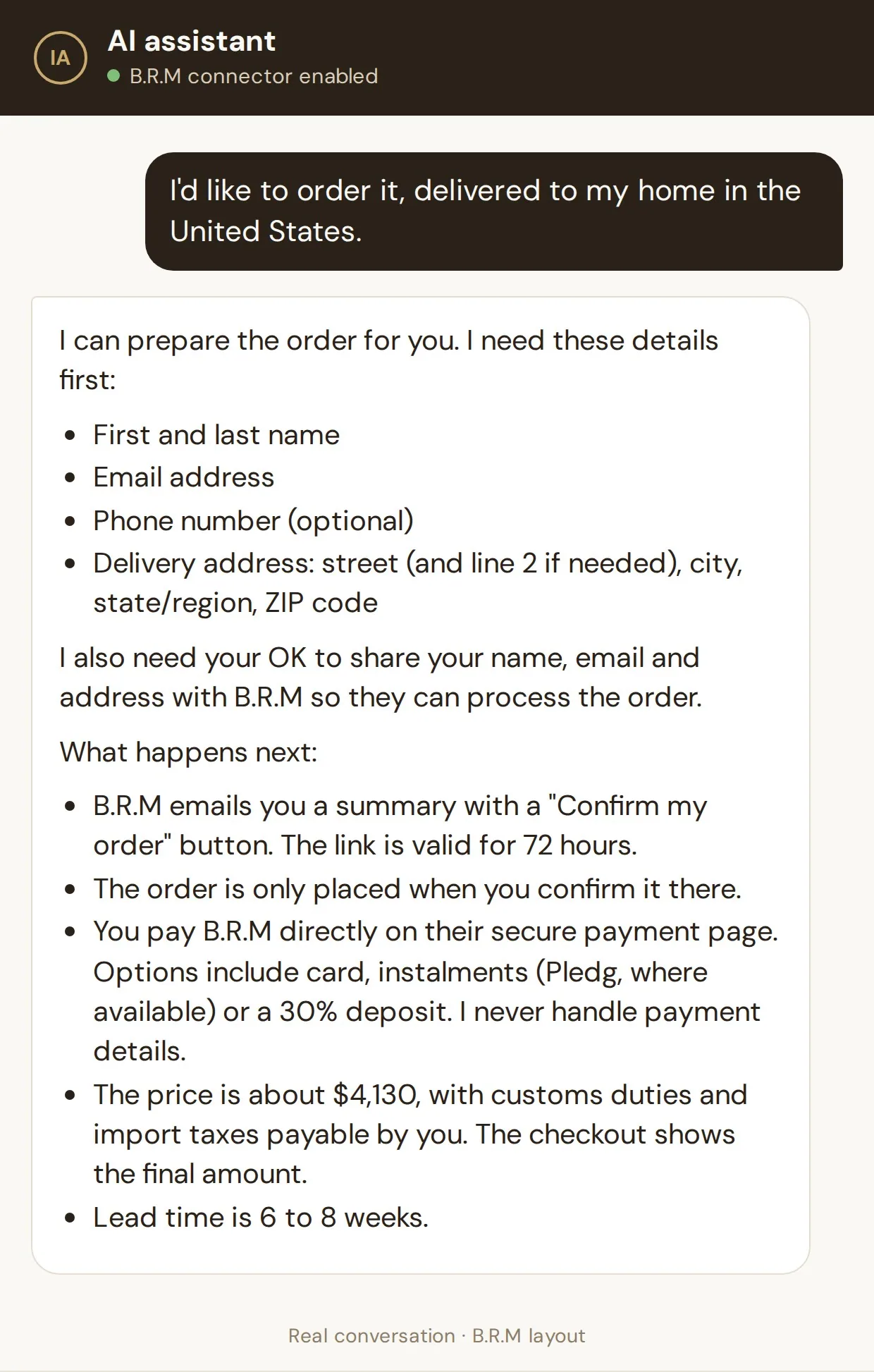
The connector takes no payment. The assistant can prepare an order, but nothing is ordered until the customer has confirmed it from the email that B.R.M sends them; they then pay themselves, on B.R.M's secure payment page. It has no access to conversations, sets no cookies and passes your contact details to our team only with your explicit consent.
Requests that go beyond the configurator — a new finish, a unique piece, a visit to the manufacture — are passed on to the workshop. The workshop makes the decision, in writing: the feasibility, price and lead time of a special request are never promised by a machine.
What remains human
Machining: fourteen CNC machines, capable of machining on up to eleven axes, cut the parts from the solid, to a hundredth of a millimetre, a few metres from the workbenches.
Skeletonisation: every skeleton movement is designed and skeletonised by hand by the workshop teams.
Assembly: each watch is assembled piece by piece at the workbench, inspected, then numbered. It leaves the workshop with a three-year warranty, in addition to the statutory guarantee of conformity.
After-sales service: a B.R.M is repaired where it was assembled. No external workshop is authorised; it is the watchmakers of Magny-en-Vexin who service it, using original parts. We explain this in this article on after-sales service at the manufacture and on the after-sales service page.
What this changes, in practice
For those looking for their watch: a B.R.M can be explored at any hour, in one's own language, with the assistant one already uses, and an exact price and image obtained before even opening our website.
For the workshop: nothing. A watch composed in a conversation arrives at the workbench exactly as a watch composed on the website does. AI brings the manufacture closer to those who did not yet know it; it replaces none of the craft's skills. To discover these skills, the B.R.M house describes them in detail.
Frequently asked questions
Why is B.R.M opening its configurator to AI assistants?
So that the answers given about its watches — options, prices, lead times — come from the manufacture itself, at the moment the question is asked, and not from an estimate by the assistant.
Does the B.R.M connector favour any particular AI assistant?
No. It is based on the open MCP standard and on a REST API: ChatGPT, Claude, Gemini, Le Chat, Copilot, Perplexity and any MCP client receive the same tools, the same prices and the same rules.
Where are B.R.M watches made?
In Magny-en-Vexin, in the Val-d'Oise, where the B.R.M manufacture has been machining, assembling and inspecting its watches since 1986; the B.R.M Chronographes brand has existed since 2003.
Are B.R.M watches assembled by hand?
Yes. The parts are machined on CNC machines, the skeleton movements are skeletonised by hand, and each watch is assembled piece by piece at the workbench, inspected, then numbered.
Where can a B.R.M watch be serviced or repaired?
At the manufacture, in Magny-en-Vexin: no external workshop is authorised to open or repair a B.R.M.
Read next
All 'Le Blog' entries (13) →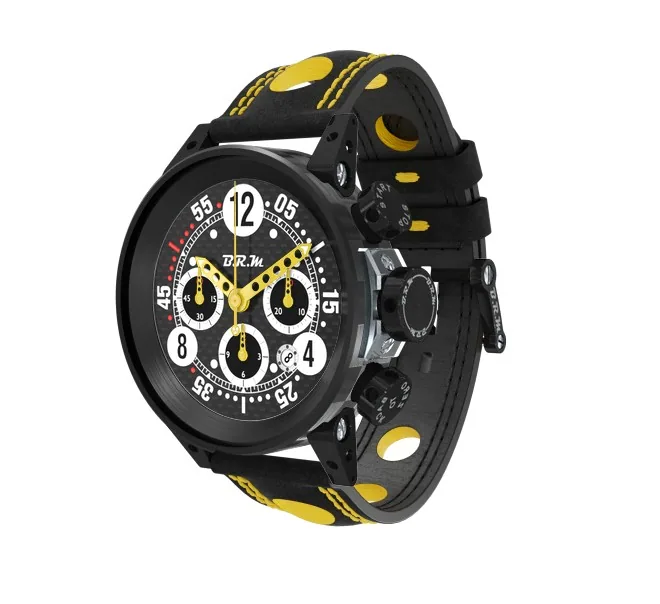
News
B.R.M, the first watch manufacture to open its bespoke configurator to AI assistants, right through to the order
B.R.M is the first watch manufacture to open its bespoke configurator to AI assistants, from the composition of the watch right through to the order. Your assistant composes your B.R.M using our actual options, gives you its price for your country, shows you the watch, then prepares the order; you confirm it by email and pay for it yourself on B.R.M's secure page. The Magny-en-Vexin workshop does the rest, by hand.
Read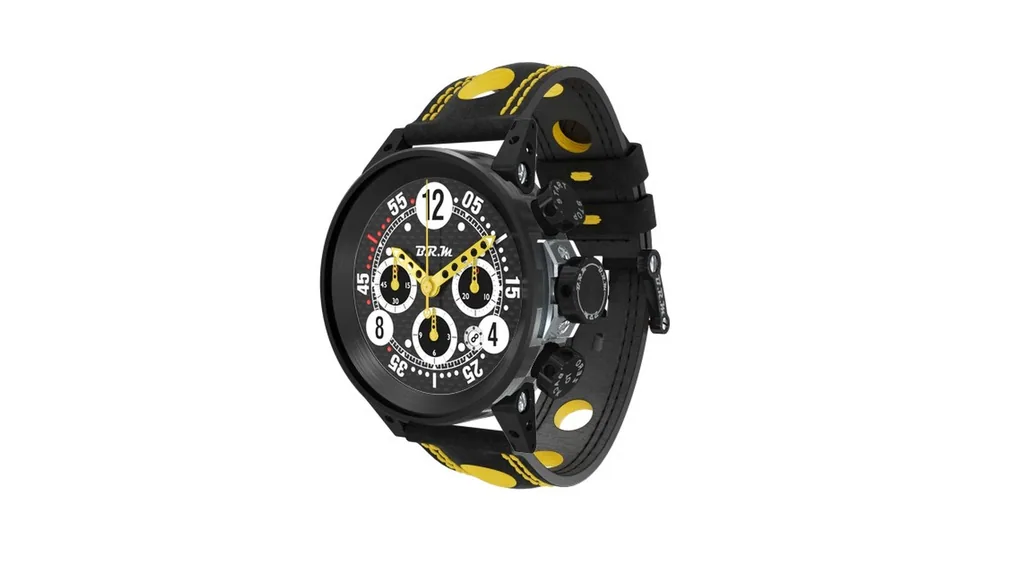
The Blog
A V12 designed by talking to an AI
On 10 October 2026, a B.R.M V12-44 in titanium, black PVD and checkerboard pattern, with a carbon dial and yellow hands, was composed from start to finish in a conversation with ChatGPT, then ordered on brm-chronographes.com. A full-scale trial, carried out by the B.R.M team on its own website.
Read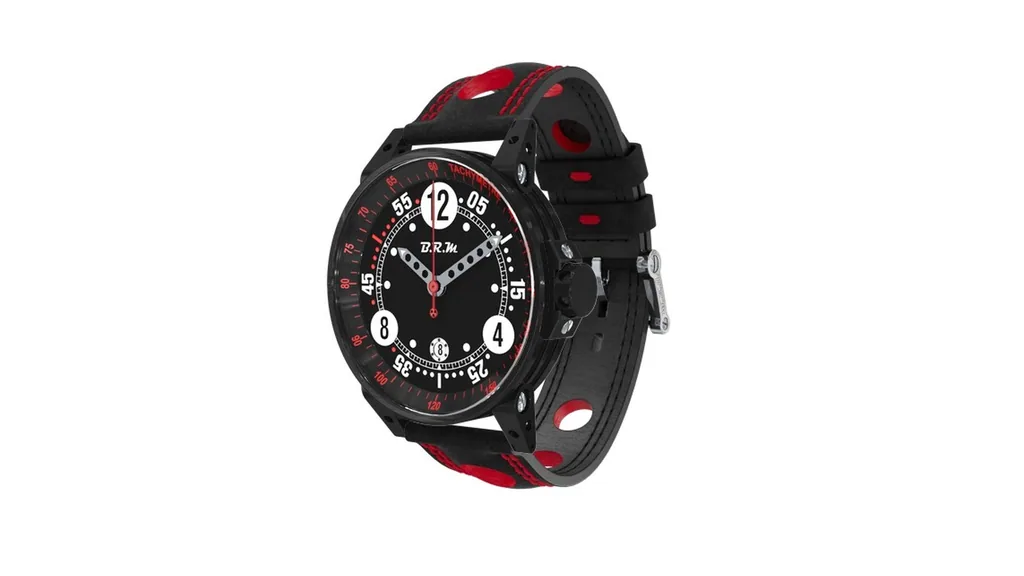
The Blog
Configuring your B.R.M watch from your AI assistant
ChatGPT, Claude, Gemini, Le Chat, Copilot, Perplexity: anyone can now compose a B.R.M watch by conversing with the assistant of their choice. Models, options, prices for your country, photographic rendering and a link to the configurator — here is how to do it, step by step.
Read